
Premenstrual Dysphoric Disorder (PMDD): The Neuroscience Behind Hormone Sensitivity
Author: Shriya Srikoti || Scientific Reviewer: Obonti Siddiqui || Lay Reviewer: Narindra Ratsimandresy || General Editor: Khady Gaye
Artist: Anjani Sriram || Graduate Scientific Reviewer: Katie Calaku
Publication Date: December 19th, 2025
Introduction
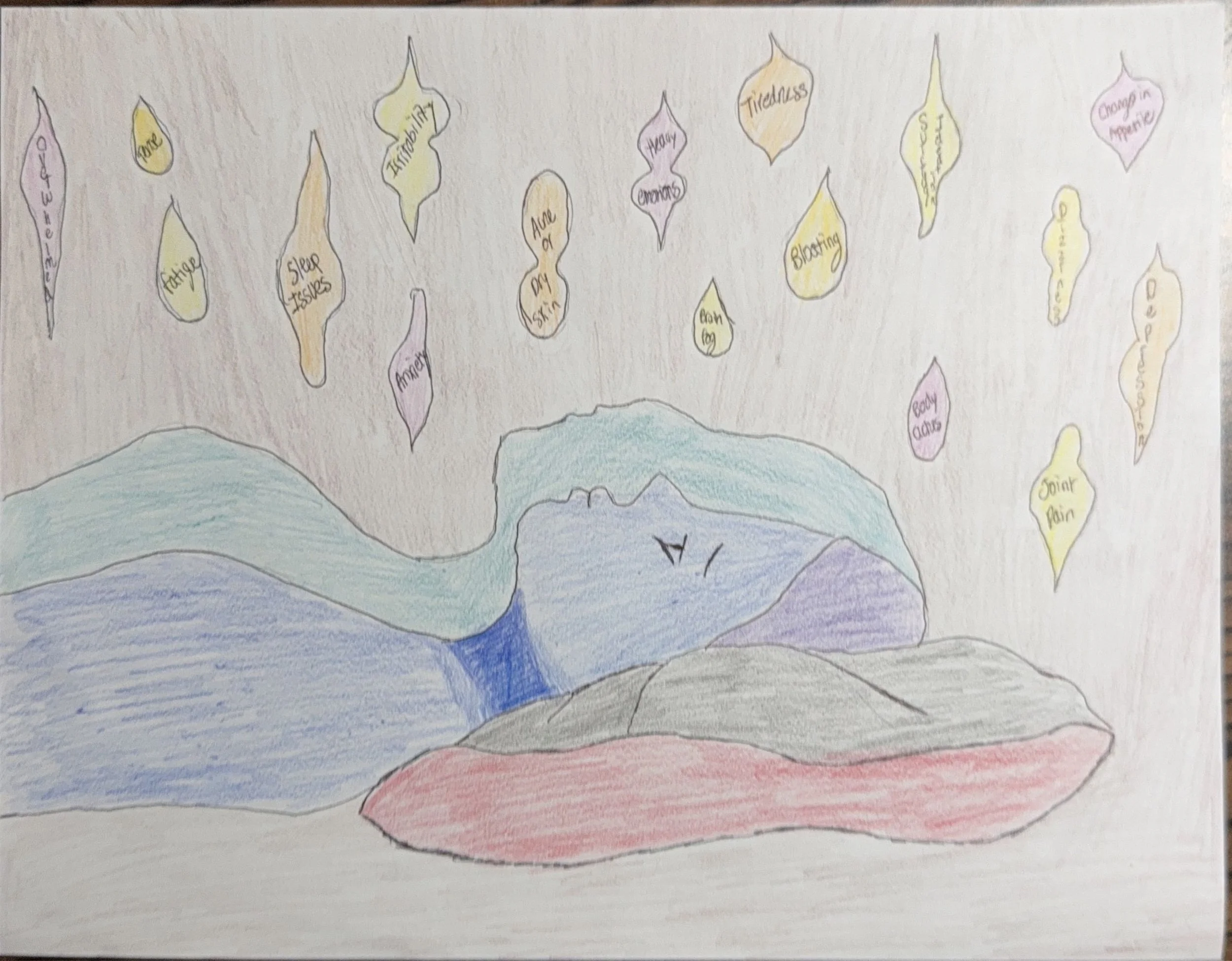
For many, the days leading up to their period can bring mild irritability or fatigue. For others, these same days can trigger waves of despair, panic, or rage so severe that it can disrupt their relationships, work, or even their will to live. While these may be one-off symptoms to some, for those with premenstrual dysphoric disorder (PMDD), this is a constant reality. PMDD is a severe mood and neuroendocrine disorder that extends beyond the common symptoms of premenstrual syndrome (PMS), thus leading to PMDD being referred to as an extreme form of PMS. Although PMS is often marked by temporary discomfort or mood changes, PMDD is a clinically specific condition characterized by extreme sadness, mood swings, severe anxiety, and, in some cases, suicidal thoughts. PMDD is not the result of abnormal hormone levels; rather, this condition develops when the brain reacts with heightened sensitivity to the normal hormonal fluctuations of estrogen and progesterone that occur throughout the menstrual cycle. With PMDD, the issue does not simply rely on hormonal imbalances, but rather on how the brain reacts, transforming typical monthly changes into large shifts in mood and emotion.

The Hormone Cycle
The menstrual cycle is regulated by predictable changes in two primary hormones: estrogen and progesterone. Estrogen helps build up the uterine lining and supports ovulation, while progesterone prepares the body for a potential pregnancy by maintaining that uterine lining. These hormone levels tend to fluctuate during the various phases of the cycle [1]. Days 1 to 14 of the cycle are typically considered the follicular phase and are characterized by a gradual increase in estrogen levels. Estrogen tends to peak just before ovulation, which occurs around day 14. In the luteal phase, which occurs around days 15 to 28, progesterone becomes the dominant hormone, while estrogen levels decline. This coordinated shift prepares the body for a potential pregnancy.
For most, the brain adjusts smoothly to the monthly fluctuations of estrogen and progesterone, leading to only mild mood changes. In PMDD, however, the problem is not the hormones themselves but how the brain responds to them. Research shows that the serotonin system in those with PMDD is altered from their regular state. For example, individuals with PMDD take up serotonin more quickly, leaving less of it available for mood regulation [2]. Those with PMDD also react differently to a neurosteroid synthesized from progesterone, called allopregnanolone, which, in most people, helps reduce stress and anxiety. Brain imaging studies further show that areas involved in processing emotions, such as the amygdala, become more reactive during the luteal phase in individuals with PMDD. Together, these differences create an exaggerated emotional response to otherwise normal hormone changes, leading to the severe anxiety, irritability, and depression that characterize PMDD.
Serotonin System
Serotonin is a neurotransmitter that plays an essential role in regulating mood, emotional stability, and sleep. In those unaffected by PMDD, the minor fluctuations in serotonin levels and activity are insignificant enough that there are no major psychological changes, but rather only mild irritability and anxiety.
However, the serotonergic system (the network of brain cells that produce, release, and respond to serotonin) shows measurable differences from those who do not struggle with PMDD. Neuroimaging studies show altered serotonin transporter (SERT) binding and increased SERT density within the midbrain. This means that serotonin reuptake post-synapse–when serotonin is reabsorbed back into the presynaptic neuron after being released–is much more common in individuals with this condition than it is in unaffected individuals [3]. This reduced availability of serotonin in the synapse causes impairments in mood stabilization.
The luteal phase, during which progesterone and estrogen levels rise after ovulation, is a crucial time when those with PMDD experience a sharper reduction in serotonin activity, which is paired with the onset of other known symptoms, including irritability, sadness, and heightened anxiety [4].
Stronger clinical evidence for serotonin’s involvement in those with PMDD comes from the effectiveness of selective serotonin reuptake inhibitors (SSRIs). SSRIs are medications that increase the amount of serotonin available in the brain by blocking its reabsorption into neurons. Unlike those who suffer from major depressive disorder, where daily dosing and delayed responses are typical, SSRIs relieve PMDD symptoms within days and can be prescribed intermittently–taken only during the luteal phase or at symptom onset [5]. This rapid and phase-specific efficiency shows that PMDD is not due to a serotonin deficiency within the midbrain, but rather due to a miscommunication in signaling between hormonal shifts and serotonin.
Neurosteroids and Allopregnanolone
Progesterone, during the luteal phase, turns into allopregnanolone (ALLO), a neurosteroid that normally enhances the activity of GABA-A receptors in the brain, producing calming and anti-anxiety effects [6]. In individuals unaffected by PMDD, ALLO contributes to mood stability. In PMDD, however, ALLO produces the opposite effects, worsening irritability and anxiety instead of reducing them. Research suggests that this may be due to altered receptor sensitivity, whereby the same neurosteroid signal is misinterpreted by the brain. Animal models support this hypothesis, indicating that differences in sensitivity to ALLO can trigger PMDD-like symptoms [3].
Brain Circuits
PMDD involves dysfunction not just at the neurotransmitter level, but also in larger brain networks that regulate emotion. Neuroimaging studies reveal hyperactivity in the amygdala, which is associated with heightened fear, anger, and reactivity [1]. At the same time, the prefrontal cortex shows reduced regulatory control, limiting its ability to moderate emotional responses. The hippocampus and hypothalamic-pituitary-adrenal (HPA) axis also demonstrate dysregulation, amplifying stress reactivity [7]. The hippocampus, a region for memory and understanding emotional experiences, normally helps signal when a stress response should be turned off. It works closely with the HPA axis, the body’s central stress-response system, which regulates the release of cortisol. Together, these findings suggest that PMDD reflects disrupted communication between hormonal signals and brain regions responsible for emotional regulation, leading to the severe mood symptoms observed clinically.
Clinical and Social Relevance
PMDD is often misdiagnosed as major depression, generalized anxiety disorder, or even bipolar disorder, due to overlapping mood symptoms [8]. Misdiagnosis delays effective treatment and worsens patient outcomes. Additionally, stigma surrounding menstrual health contributes to underdiagnosis and dismissal of symptoms, leaving many individuals without proper support.
The impact of PMDD is substantial. It can interfere with occupational functioning, strain interpersonal relationships, and significantly reduce quality of life [9]. The condition underscores the importance of recognizing menstrual-linked mood disorders as legitimate and treatable.
Treatments and Research Directions
Several treatment strategies are available for PMDD. SSRIs remain the most effective medication and are notable for their rapid onset and intermittent dosing options [5]. Hormonal contraceptives, which suppress ovarian cycling, have variable success depending on the individual [10].
Emerging therapies target neurosteroid pathways. Compounds such as brexanolone and zuranolone are being investigated for their ability to stabilize GABA-A receptor signaling, directly addressing the abnormal ALLO sensitivity observed in PMDD [6]. Future research could focus on genetic predisposition, receptor biology, and the development of personalized treatment approaches.

Conclusion
PMDD highlights the complex relationship between reproductive hormones and the brain. While estrogen and progesterone levels are normal in those affected, their brains interpret these hormonal signals in atypical ways, leading to severe mood and behavioral symptoms. This condition is not simply “bad PMS,” but a distinct neurobiological disorder involving changes in serotonin signaling, altered sensitivity to neurosteroids like allopregnanolone, and disruptions in emotion-regulating brain circuits.
Recognizing PMDD as a legitimate and biologically based disorder is critical to reducing stigma and ensuring that affected individuals receive timely, effective treatment. By studying PMDD, researchers gain valuable insight into how hormone fluctuations interact with neurotransmitters and brain circuits, advancing our understanding of mood regulation more broadly. These findings not only improve care for PMDD but may also inform treatments for other mood and anxiety disorders linked to hormonal and stress-related changes.
References
Dubol, M., Epperson, C. N., Lanzenberger, R., Sundström-Poromaa, I., & Comasco, E. (2020). Neuroimaging premenstrual dysphoric disorder: A systematic and critical review. Frontiers in Neuroendocrinology, 57, 100838. https://doi.org/10.1016/j.yfrne.2020.100838
Hantsoo, L., & Epperson, C. N. (2015). Premenstrual dysphoric disorder: Epidemiology and treatment. Current Psychiatry Reports, 17(11), 87. https://doi.org/10.1007/s11920-015-0628-3
Sacher, J., Zsido, R. G., Barth, C., Zientek, F., Rullmann, M., Luthardt, J., Patt, M., Becker, G. A., Rusjan, P., Witte, A. V., Regenthal, R., Koushik, A., Kratzsch, J., Decker, B., Jogschies, P., Villringer, A., Hesse, S., & Sabri, O. (2023). Increase in serotonin transporter binding in patients with premenstrual dysphoric disorder across the menstrual cycle: A case-control longitudinal neuroreceptor ligand PET imaging study. Biological Psychiatry, 93(12), 1081–1088. https://doi.org/10.1016/j.biopsych.2022.12.023
Baller, E. B., Wei, S.-M., Kohn, P. D., Rubinow, D. R., Alarcón, G., Schmidt, P. J., & Berman, K. F. (2013). Abnormalities of dorsolateral prefrontal function in women with premenstrual dysphoric disorder: A multimodal neuroimaging study. American Journal of Psychiatry, 170(3), 305–314. https://doi.org/10.1176/appi.ajp.2012.12030385
Yonkers, K. A., Kornstein, S. G., Gueorguieva, R., Merry, B., Van Steenburgh, K., & Altemus, M. (2015). Symptom-onset dosing of sertraline for the treatment of premenstrual dysphoric disorder: A randomized clinical trial. JAMA Psychiatry, 72(10), 1037–1044. https://doi.org/10.1001/jamapsychiatry.2015.1472
Steiner, M., Pearlstein, T., Cohen, L. S., Endicott, J., Kornstein, S. G., Roberts, C., Roberts, D. L., & Yonkers, K. (2006). Expert guidelines for the treatment of severe PMS, PMDD, and comorbidities: The role of SSRIs. Journal of Women’s Health, 15(1), 57–69. https://doi.org/10.1089/jwh.2006.15.57
Gilbert, P. F. C. (2001). An outline of brain function. Cognitive Brain Research, 12(1), 61–74. https://doi.org/10.1016/S0926-6410(01)00035-0
Yonkers, K. A. (1997). The association between premenstrual dysphoric disorder and other mood disorders. The Journal of Clinical Psychiatry, 58, 19–25. https://www.psychiatrist.com/wp-content/uploads/2021/02/10999_association-between-premenstrual-dysphoric-disorder.pdf
Halbreich, U., Borenstein, J., Pearlstein, T., & Kahn, L. S. (2003). The prevalence, impairment, impact, and burden of premenstrual dysphoric disorder (PMS/PMDD). Psychoneuroendocrinology, 28(Suppl. 3), 1–23. https://doi.org/10.1016/S0306-4530(03)00098-2
Pearlstein, T., & Steiner, M. (2011). Premenstrual dysphoric disorder: Recognition and treatment. American Family Physician, 84(8), 918–924. https://www.aafp.org/pubs/afp/issues/2011/1015/p918.html