
Yoga and the Vagus Nerve: How Pranayama Tunes the Brain-Body Connection
Author: Deepa Subramanya || Scientific Reviewer: John Cabrera || Lay Reviewer: Stanley Chen || General Editor: Demure McKenzie
Artist: Willow Tapp || Graduate Scientific Reviewer: Steve Bergquist
Publication Date: December 19th, 2025

When we tell someone to “just take a deep breath,” we’re tapping into something humans have known intuitively for centuries: breath is medicine. Across cultures and traditions, slowing down the breath has been seen as a way to regain balance when life feels overwhelming. In yoga, this practice of breath control, known as pranayama, is more than a quick stress hack. Pranayama is a disciplined method rooted in Hindu philosophy and Ayurvedic medicine where breath is understood as prana, the vital force that sustains both body and mind. Modern neuroscience is now catching up to this ancient wisdom, showing us that pranayama supports a healthier nervous system through its influence on the vagus nerve.
Ancient practices have valued the power of breath for centuries, and now modern science is proving that the power of breath is no longer just stories passed down through generations, but rather an alternative or supplement to certain clinical applications for both mental and physical health. Pranayama, when understood properly and utilized as a tool, has the potential to reshape medicine as we know it by bridging together eastern and western perspectives. Breath has been central in yogic and Ayurvedic traditions for years, not only as a life force (prana), but as a direct pathway to mental clarity. Ancient texts like the Hatha Yoga Pradipika emphasized pranayama as essential for calming the mind and regulating the body, which anticipated modern discoveries about breath’s physiological effects [1]. Modern science has now confirmed that controlled breathing directly alters autonomic function, brain activity, and emotional states [2] and the examples written throughout this article offers biological explanations for what ancient traditions have observed empirically. Coupled with evidence that pranayama reduces symptoms of common mental health conditions such as anxiety and depression [3], and pranayama’s impact on enhancing vagal tone (vagus nerve activity) by stimulating parasympathetic pathways [4], there is strong evidence that pranayama is a healing therapy with measurable outcomes. Especially in the context of today’s global stress epidemic and mental health crises, pranayama can be utilized not just as a spiritual tradition, but a tool.
The vagus nerve, often called the “brain-body superhighway,” is the string that ties breath to emotion, thought, and physical health. Stretching from the brainstem to the heart, lungs, and gut, it quietly governs much of our involuntary bodily functions. When we breathe slowly and rhythmically, vagal signals send a message of safety to the brain, tipping the scale from feeling anxious and distressed to calm and collected. This shift is measurable in several ways: greater heart rate variability, reduced stress, and brain activity patterns associated with calm are all associated with controlled breathing. This is how Pranayama utilizes resilience mechanisms of the body. Where Western medicine uses implanted devices for vagus nerve stimulation, yoga achieves a similar effect with nothing more than the breath. Through the action of the vagus nerve, we can see ancient practice and modern science converge toward a common truth.
The Vagus Nerve: The Brain-Body Superhighway
The vagus nerve, also known as cranial nerve X, is the main channel of communication between the brain and vital organs. As it emerges from the brainstem, it branches down towards the heart, lungs, gut, and even the immune system, carrying both sensory (afferent) and motor (efferent) signals. The vagus nerve serves as a “superhighway” of information in 2 directions: the brain continuously sends signals to monitor the state of the body, while the body sends feedback that can shape thoughts, emotions, and physiological states. According to neuroscientists, this dual function that the vagus nerve possesses is what makes it central to balancing involuntary bodily functions, coordinating everything from digestion and respiration to emotional regulation [5, 6].
Understanding breath requires understanding the vagus nerve. The vagus nerve is the primary component of the autonomic nervous system, where it helps determine whether the body tilts toward sympathetic “fight-or-flight” arousal or parasympathetic “rest-and-digest” recovery. Early twentieth-century research into the hypothalamus and cervical sympathetic system laid the groundwork for understanding how the brain exerts control over this balance [7]. Now, modern studies confirm that stimulating the vagus nerve can measurably lower heart rate, stabilize blood pressure, and reduce stress hormones. This leads to the conclusion that the vagus nerve is able to serve as a biological link between conscious breathing and unconscious physiology, which allows scientists to form a gateway to understanding how practices like pranayama can influence not only how we feel, but how our bodies function at deeper levels.
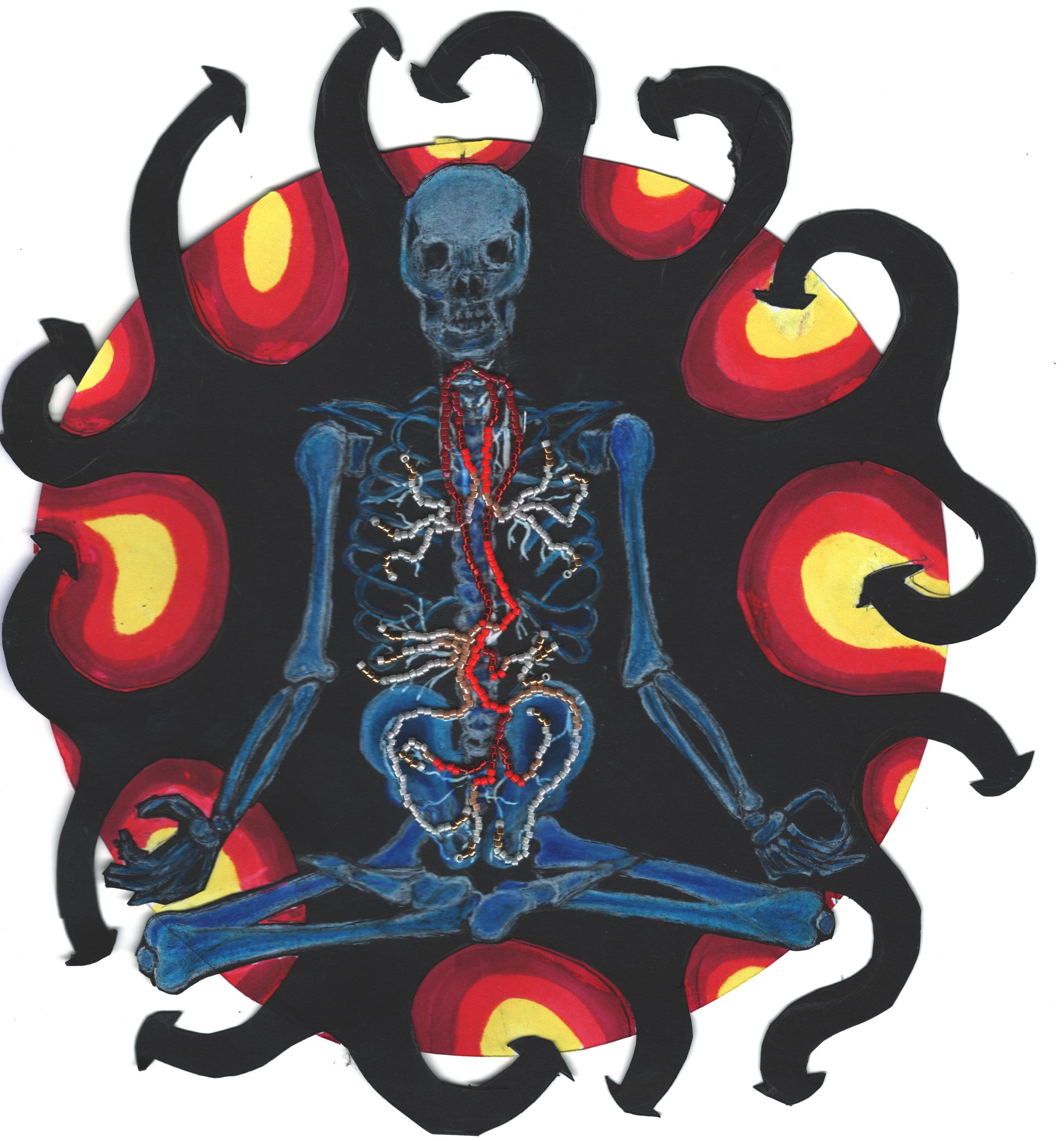
Pranayama as Natural Vagus Nerve Stimulation
Before delving into how pranayama works, let’s explore what pranayama is. In simple terms, pranayama is defined as the yogic practice of focusing on the breath. In classical yoga, breath is directly associated with energy, or prana. When put together with the root word yama, which means control, pranayama in Ayurvedic medicine is the “control of energy” within the body, which is achieved through breathwork. In ancient Ayurvedic medicine, there are many different techniques that fall under pranayama practice. For example, practices can range from simple breath awareness to Ujjayi pranayama, which involves slightly constricting the back of the throat to create a soft, ocean-like sound, and advanced styles like Kapalabhati, which involves rapid, forceful exhalations and passive inhalations. Each pranayama style has its own purpose and effect on the nervous system, and in turn, the physical and mental state of the individual.
This practice of breathing with awareness has a significant effect on the nervous system because slow rhythmic, intentional breathing is the stimulus to activate vagal nerves. When breath is slowed down and done intentionally, the lungs are physically stretched and receptors in the airways are activated. It is important to note that more advanced pranayama practices deal with a range of breathing exercises, some with slower, deeper breathing, and others with vigorous and fast-paced breathing. Once experience is gained, this same physiological impact is possible regardless of what pranayama practice is done. But, in terms of beginner practice, practicing slow, deep breaths with awareness is the first step in activating the receptors in the airways. This triggers a reflex response that increases vagus nerve activity, thus stimulating the parasympathetic nervous system. By lengthening exhalations through different pranayama exercises, vagal activation is further promoted, lowering the heart rate and blood pressure as well. If the air is taken in frantically, it will lead to the body reacting in a “fight or flight” mode, which is what we operate on in most high-stress situations. However, through the practice of pranayama, utilizing breathing practices to regulate one’s own energy will invite the brain to shift into a parasympathetic mode. [8]. Although pranayama effectively induces parasympathetic activation, it is not the only breathing-based method to do so. Scientific literature shows that many forms of slow, intentional breathing similarly enhance vagal tone and heart rate variability, shifting the body toward a rest-and-digest state. What makes pranayama distinct is its rootedness in yogic philosophy, where breath is viewed not only as a physiological regulator but also as a vehicle for directing prana, or life energy, through the body. Thus, while the autonomic effects of slow breathing are broadly accepted in neuroscience, pranayama adds an energetic and intentional dimension that extends beyond purely biomedical interpretations.
Medical vagus nerve stimulation is a popular treatment for conditions like epilepsy and depression, where an implanted device sends electrical pulses to the vagus nerve to regulate the nervous system. Comparatively, yoga and pranayama is a more holistic approach, in the sense that it involves internal work to integrate the physical, mental, emotional, and energetic sheaths of a human being. Utilizing these practices, it is possible to achieve the same goal as many advanced neuroscientific treatments. Not only is it possible, but for many individuals, it has proven to be just as effective, as detailed by the stories of famous yoga instructors BKS Iyengar and Mukunda. For individuals who do not are hesitant of the financial burden and the larger commitment to getting a device surgically implanted, practicing pranayama diligently and with proper training can help patients reap similar benefits to vagus nerve stimulation.
Neurobiology of Yogic Breathing
Beyond just the impact on the vagus nerve, yoga practitioners receive a plethora of other benefits from the practice of pranayama. These benefits are largely neurobiological, which explains yoga’s holistic impact on the body and the brain.
Yogic breathing, combined with yoga practices impact the distribution of common neurotransmitters within the brain. For example, a study from Boston University found that yoga practice increases the brain GABA levels, which play a direct role in reducing anxiety and improving mood [9]. Additionally, regular meditation and yoga breathing have also been shown to stimulate the vagus nerve and increase tryptophan metabolism, which in turn increases the availability of the neurotransmitter serotonin [10]. Increased availability of serotonin is directly correlated with increased feelings of happiness, calmness, and emotional stability, as well as better cognition and lifestyle habits. Another neurotransmitter that is affected is dopamine, which has been shown to be released more in the brain following yoga practice, enhancing attention and reward sensitivity [11].
Brain imaging findings have also showcased that pranayama practice can lead to electroencephalography (EEG) shifts and fMRI evidence of default mode network (DMN) quieting. Imaging studies using both EEG and fMRI technology show yogic practices changing brain activity. Yogic breathing and meditation have shown increased alpha and theta wave activity in the brain, both of which correlate with relaxation and reduced stress [12]. Using advanced meditation practice (practicing intense focus to achieve a state of calmness) combined with pranayama practice, individuals have shown bursts of high-frequency gamma activity, which is associated with integration of information and attention [13]. Intriguingly, mindfulness and breath-focused meditation has reduced activity in the default mode network (DMN), a set of interconnected brain regions that are most active when a person is not focused on the present. For many, this includes activities such as daydreaming, contemplating about the past or the future, or self-reflecting. The default mode network is often hyperactive during periods of rumination and depression [14]. This decrease in DMN activity caused by yogic practices is evidence that through vagus nerve stimulation, the brain's thinking is shifted in a more positive direction, especially under stressful or emotionally heavy conditions.
Pranayama, coupled with practices like mindfulness and meditation, can play a role in increasing neuroplasticity. Studies show that consistent practice has produced long-term changes in amygdala reactivity, prefrontal cortex regulation, and hippocampal resilience. One study showed that eight weeks of mindfulness-based stress reduction (MSBR) was associated with decreased amygdala activation to stress and emotional stimuli [15]. Another study showed that long-term meditation practitioners show increased thickness and activity in the prefrontal cortex, enhancing top-down emotional regulation [16]. These examples serve to signify that these practices have neurobiological effects that impact more than just the vagus nerve and the parasympathetic nervous system, but also the everyday experiences we have when it comes to handling the stress of life, regulating personal emotions, and learning and memory.
Bridging Eastern and Western Perspectives
While it may take time before pranayama and yoga practices are seen as a standalone treatment in the Western perspective, now is the time to understand its transformative impact and begin utilizing it to support standard treatment for stress-related disorders and more. Pranayama requires no equipment and minimal training, and while it is encouraged to begin slowly and under proper guidance, it is a premiere example of a low-cost accessible intervention. Integrating yoga and breathwork alongside conventional therapies can benefit patients and transform their lives holistically. One powerful example comes from my own family. My father, who faced a range of chronic health challenges, including a herniated disc, asthma, and anxiety – found profound relief through the consistent practice of yoga and pranayama. Guided by the teaching of Mukunda Stiles, an influential yoga therapist and author, he committed to a daily practice that still stands strong over fifteen years later. Over time, he experienced significant improvements not only in his physical pain and respiratory health but also in his emotional well-being. Without relying heavily on medication or invasive treatments, he was able to regain balance and vitality, a transformation that highlights the healing potential of breath-centered practices. While this won’t be the story for everyone, yoga can certainly play a helping hand in the healing journey of patients around the world by engaging the vagus nerve to regulate the nervous system and enhance brain-body communication.
References
Stiles, M. (2007). Ayurvedic yoga therapy. Lotus Press.
Jerath, R., Edry, J. W., Barnes, V. A., & Jerath, V. (2006). Physiology of long pranayamic breathing: Neural respiratory elements may provide a mechanism that explains how slow deep breathing shifts the autonomic nervous system. Medical Hypotheses, 67(3), 566–571.https://doi.org/10.1016/j.mehy.2006.02.042
Sahasi, G., Mohan, D., & Kacker, C. (1989). Effectiveness of yogic techniques in the management of anxiety. Journal of Personality and Clinical Studies, 5(1), 51–55.
Porges, S. W. (2007). The polyvagal perspective. Biological Psychology, 74(2), 116–143.https://doi.org/10.1016/j.biopsycho.2006.06.009
Prescott, S. L., & Liberles, S. D. (2022). Internal senses of the vagus nerve. Neuron, 110(4), 579–599.https://doi.org/10.1016/j.neuron.2021.12.020
Sharkey, K. A., & Mawe, G. M. (2023). The enteric nervous system. Physiological Reviews, 103(2), 1487–1564.https://doi.org/10.1152/physrev.00018.2022
Ma, L., Wang, H. B., & Hashimoto, K. (2025). The vagus nerve: An old but new player in brain–body communication. Brain, Behavior, and Immunity, 124, 28–39.https://doi.org/10.1016/j.bbi.2024.11.023
Bandara, N., & Singh, V. K. (2021). Effect of yoga pranayama (breathing techniques) on the vagus nerve in countering major depression and related ailments: A literature review. International Journal of Current Science Research and Review.https://ijcsrr.org/wp-content/uploads/2021/10/12-12-2021.pdf
Streeter, C. C., Jensen, J. E., Perlmutter, R. M., Cabral, H. J., Tian, H., Terhune, D. B., Ciraulo, D. A., & Renshaw, P. F. (2007). Yoga asana sessions increase brain GABA levels: A pilot study. The Journal of Alternative and Complementary Medicine, 13(4), 419–426.https://doi.org/10.1089/acm.2007.6338
Young, S. N. (2007). How to increase serotonin in the human brain without drugs. Journal of Psychiatry & Neuroscience, 32(6), 394–399.
Kjaer, T. W., Bertelsen, C., Piccini, P., Brooks, D., Alving, J., & Lou, H. C. (2002). Increased dopamine tone during meditation-induced change of consciousness. Cognitive Brain Research, 13(2), 255–259.https://doi.org/10.1016/S0926-6410(01)00106-9
Lagopoulos, J., Xu, J., Rasmussen, I., Vik, A., Malhi, G. S., Eliassen, C. F., Arntsen, I. E., Sæther, J. G., Hollup, S., Holen, A., Davanger, S., & Ellingsen, Ø. (2009). Increased theta and alpha EEG activity during nondirective meditation. The Journal of Alternative and Complementary Medicine, 15(11), 1187–1192.https://doi.org/10.1089/acm.2009.0113
Lutz, A., Greischar, L. L., Rawlings, N. B., Ricard, M., & Davidson, R. J. (2004). Long-term meditators self-induce high-amplitude gamma synchrony during mental practice. Proceedings of the National Academy of Sciences, 101(46), 16369–16373.https://doi.org/10.1073/pnas.0407401101
Brewer, J. A., Worhunsky, P. D., Gray, J. R., Tang, Y. Y., Weber, J., & Kober, H. (2011). Meditation experience is associated with differences in default mode network activity and connectivity. Proceedings of the National Academy of Sciences, 108(50), 20254–20259.https://doi.org/10.1073/pnas.1112029108
Goldin, P. R., & Gross, J. J. (2010). Effects of mindfulness-based stress reduction (MBSR) on emotion regulation in social anxiety disorder. Emotion, 10(1), 83–91.https://doi.org/10.1037/a0018441
Lazar, S. W., Kerr, C. E., Wasserman, R. H., Gray, J. R., Greve, D. N., Treadway, M. T., McGarvey, M., Quinn, B. T., Dusek, J. A., Benson, H., Rauch, S. L., Moore, C. I., & Fischl, B. (2005). Meditation experience is associated with increased cortical thickness. NeuroReport, 16(17), 1893–1897.https://doi.org/10.1097/01.wnr.0000186598.66243.19