
Neuroscience of Loneliness: How Social Isolation Reshapes the Brain
Author: JD Jeong || Scientific Reviewer: Ranesh Mopuru || Lay Reviewer: Fareda Abouzid || General Editor: Crystal Huang
Artist: Kendall White || Graduate Scientific Reviewer: Lily Steele
Publication Date: December 19th, 2025
Introduction
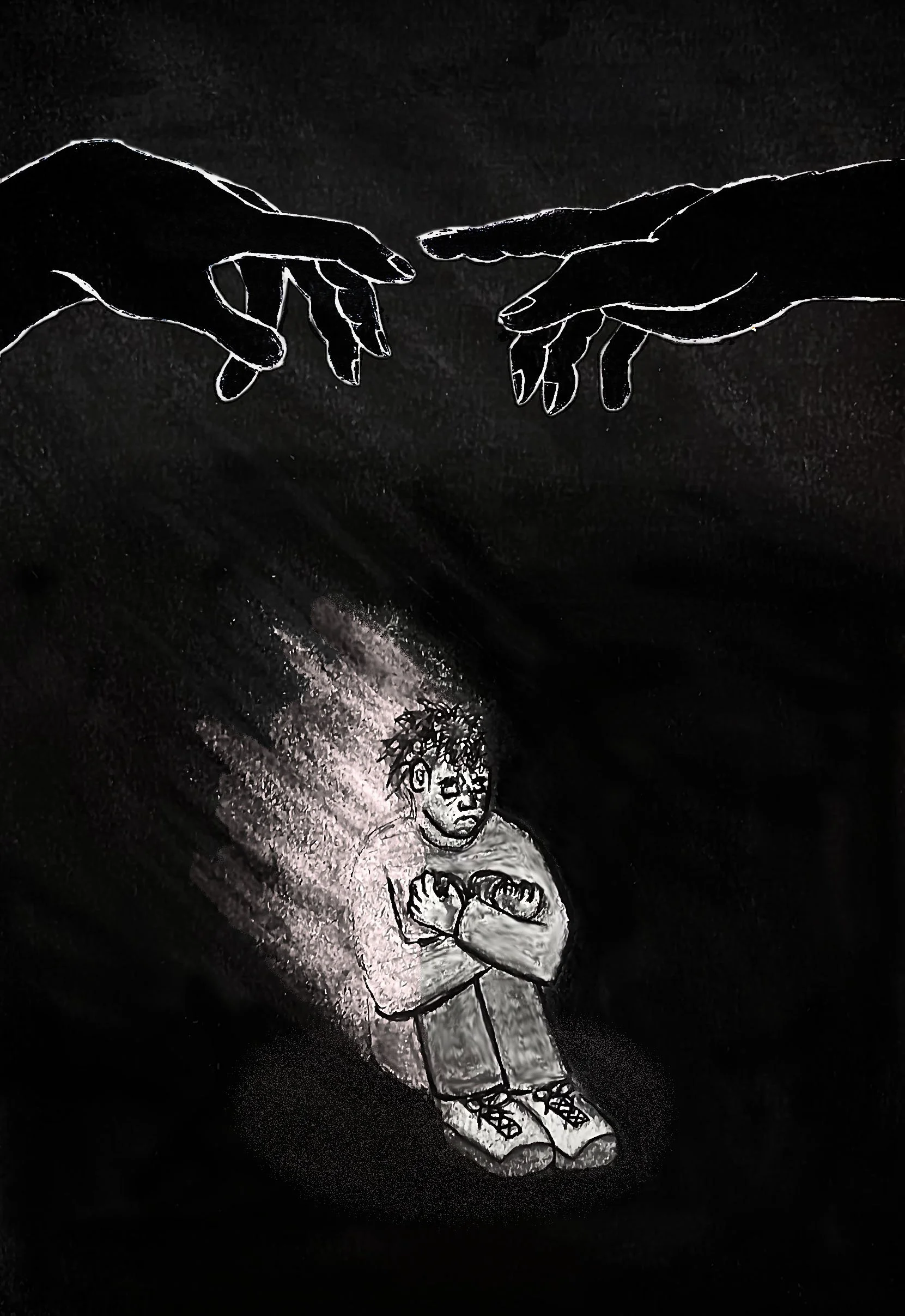
Humans are built for connection. From childhood to adulthood, humans rely on social connections not only for emotional needs but also for healthy brain development and physical well-being. Yet reports of loneliness have risen since at least the early 2000s and werefurther heightened during the COVID-19 period [1, 2], with loneliness defined as an individual experience of disconnection that can happen even in the presence of others. Research continues to show that chronic loneliness is much more than a feeling; it acts as a chronic biological stressor with known effects on the body and the brain. Epidemiological studies, which are population-based investigations that examine health outcomes across different groups, link perceived social isolation to risk for depression, cognitive decline, and cardiovascular disease [1]. These risks also extend to premature mortality and are comparable in magnitude to those associated with smoking or obesity [1].
So, what happens in the brain as a result of loneliness? Neuroscientists have started to chart the neural circuitry of subjective social disconnection in ways that correspond with the behavioral implications outlined above, such as the increased threat vigilance, diminished reward reactivity, and decreased regulatory control that are associated with depression and cognitive impairment[1, 3]. The default mode network (DMN) – brain network that is active when human at rest or thinking internally rather than focused on the external world – supports this process and shows loneliness-related alterations that are biased toward rumination and negative self-appraisal[3, 4]. Thesechanges begin through a series of stress-related inflammatory processes that happen over time [3, 4]. Fortunately, like all effects associated with neural plasticity, we know that these changes may be reversible. This article explores what happens to the brain when we feel lonely, what science says about rebuilding connections, how we frame social experiences, and how we can design policies that help people feel a stronger sense of belonging.
Defining Loneliness as a Neurobiological State
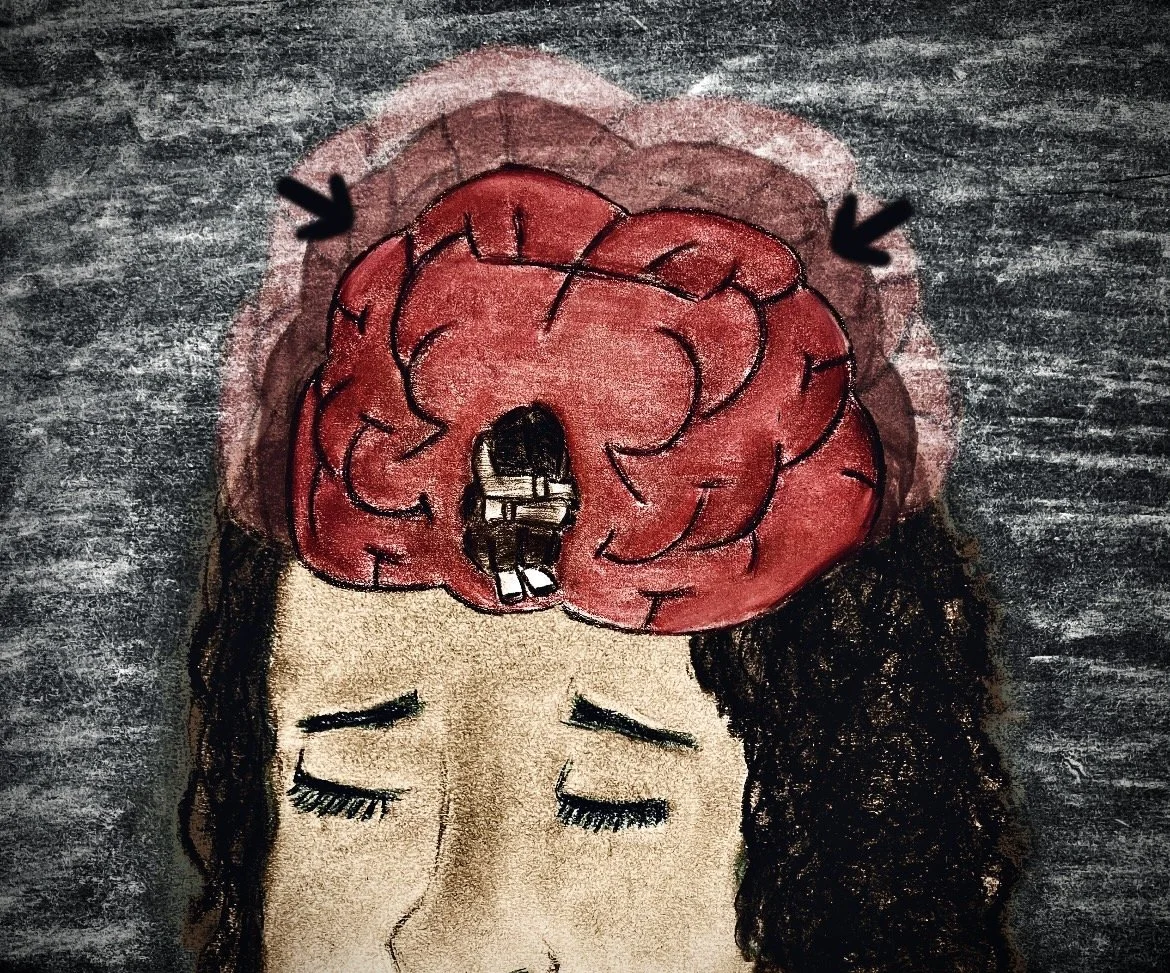
It is important to distinguish between loneliness and social isolation. Loneliness is a subjective experience in which an individual feels that their social needs are not being met in terms of the quantity or quality of their relationships. Social isolation, in contrast, is an objective experience of having few social contacts. Although loneliness and social isolation often correlate, they are conceptually distinct: a person may feel lonely even amid frequent social contact, whereas another may feel content with few contacts [1]. In a scientific sense, this distinction is important because subjective loneliness and objective social isolation predict different biological outcomes, implying partially independent pathways from the social world to the body and brain [5].
Estimates on the prevalence of loneliness vary by cohorts, but it is a prominent feature of adulthood. Before the COVID-19 pandemic struck, surveys indicated that about 20-30% of adults reported significant levels of loneliness [1, 3]. Importantly, loneliness should not be characterized as a mere psychosocial complaint; it is associated with various health and behavioral risk factors such as depressive symptoms, cognitive decline, cardiometabolic disease, and premature mortality. This is consistent with the claim that chronicloneliness acts as a biological stressor. At the biological level, subjective loneliness engages stress and immune pathways that influence neural systems over time [1, 2].
Routes from Isolation to Brain Change: Stress, HPA Axis, and Inflammation
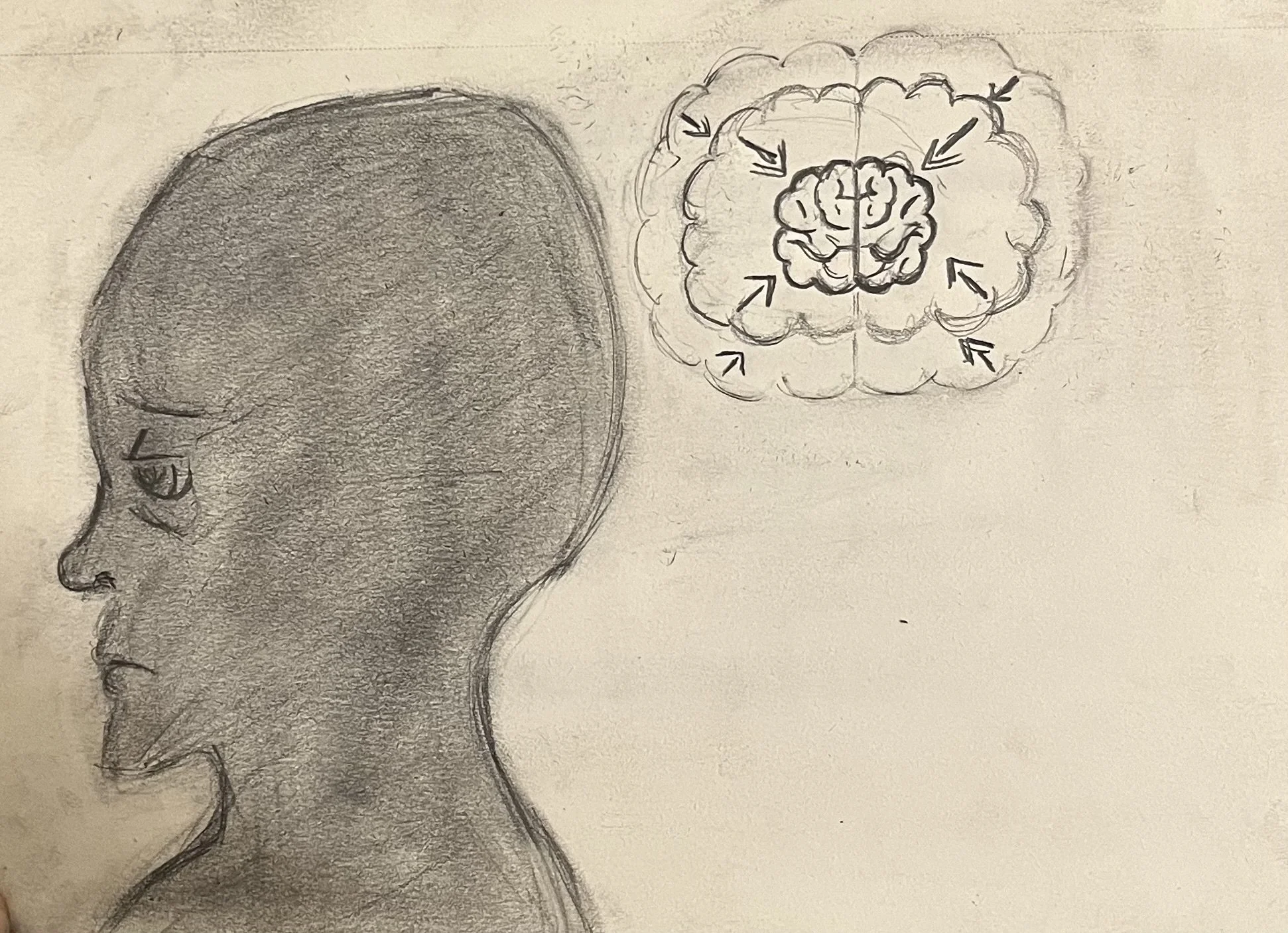
Evolutionarily, being alone (i.e., separated from one’s group) was likely a sign of danger. The nervous system, modulated by natural selection for survival, can misinterpret the experience of social disconnection as danger and mobilize a stress response. In humans, these responses manifest as increased hypothalamic-pituitary-adrenal (HPA) axis activity and sympathetic nervous system arousal, which prepare the organism for vigilance and self-preservation [1, 2].
Research demonstrates that the HPA axis is disrupted in times of loneliness as characterized by irregularities in its diurnal rhythm, which results in hypersensitivity to minor stressors. Cortisol, the primary hormone that coordinates the response to stress by mobilizing energy and regulating immune functioning, has adaptive value in the short term but can be harmful in the long term. Individuals with low social contact often show a flatter cortisol slope, or more stability in cortisol levels (e.g., from morning to evening), which is associated with chronic stress and worse health [5]. Eventually, if individuals are chronically over-exposed to glucocorticoids (hormones secreted from the adrenal glands, the end effectors of the HPA axis), their neurons become less plastic in neural regions high in glucocorticoid receptors (e.g., the hippocampus). This decrease in plasticity has been shown to lead to difficulties staying positive, poor emotional regulation, and difficulties with memory [1, 2].
In addition to the alterations in the HPA-axis described above, the immune system also changes when experiencing loneliness. Low-grade systemic inflammation is often present, which can be indexed with inflammatory biomarkers –molecules that can be measured in blood that reflect immune activity –like C-reactive protein (CRP) and interleukin-6 (IL-6). There is also evidence to suggest some partially distinct patterns: social isolation is correlated with CRP, while perceived loneliness is independently correlated with IL-6 [5]. Mechanistically, these immune changes converge with HPA dysregulation to produce changes in the brain –cytokines and glucocorticoids circulating in the blood will influence neural plasticity and glial activity in stress-sensitive neural networks, which gives some mechanism for downstream outcomes of increased threat vigilance, social anhedonia (the diminished ability to experience pleasure or interest in activities that are normally rewarding), and impairment in mood and memory [1, 2, 5]. Ultimately, the immune findings are not just isolated lab curiosities –these findings illustrate how perceived disconnection can become biologically incorporated and ultimately change behavior and cognition.
Circuit-Level Impacts: Reward, Threat, and the Default Mode
Neuroimaging studies point towards several altered networks in more isolated individuals. One of the most pronounced findings comes from a large UK Biobank sample (~40,000 adults) that linked a self-report measure of perceived loneliness to multimodal MRI revealed the strongest associations in the DMN [4]. In lonely participants, there was more gray-matter volume and stronger functional connectivity between the DMN hubs (medial prefrontal cortex, posterior cingulate cortex), as well as alterations in white matter microstructure connecting these areas. One interpretation of this is a compensatory mechanism: in the absence of satisfying social input, the brain is relying more on internal simulations – memories, imagined interactions, etc. – to fulfill social needs.
Loneliness can also change how the brain evaluates social reward. The ventral striatum –a core node of the mesolimbic dopamine system that tracks reward prediction and motivates approach behavior –often shows altered responses to social cues. In some studies, lonely individuals exhibit a reduced fMRI blood-oxygen-level–dependent (BOLD) response to positive social stimuli, a neural correlate of social anhedonia (i.e., diminished engagement of reward circuitry to social rewards). In other studies, these same circuits show heightened responses when participants view images of people that are close to them –their own romantic partners, family members, or close friends – consistent with a craving-like signal [2, 3]. Taken together, these findings suggest state dependence: acute social deprivation may sensitize reward circuits to cues of reconnection, whereas chronic discouragement may blunt the reward value of everyday social contact.
Studies consistently link loneliness to hypervigilance to threat. The anterior insula and dorsal anterior cingulate cortex, which signal the salience of social cues and of processing of negative social information [1, 3], both change functionally under lonely conditions. The amygdala, the region that signals threat and triggers defense behaviors, is implicated as well. Behaviorally, lonelier individuals are faster to identify emotions, and are also more likely to perceive ambiguous social cues as rejection. This biased perception likely offers evolutionary advantages for isolated individuals by protecting them from potential threats; however, this disposition can also result in difficult social interactions, which may exacerbate isolation.
In summary, the broad story is consistent: chronic perceived disconnection elevates internal self-focus (DMN), increases sensitivity to social threat (salience/amygdala), and disrupts reward valuation of the social context (ventral striatum), while undermining regulatory and mnemonic substrates via stress-inflammatory mechanisms.
Plasticity and Possibility: What Helps and Why
Plasticity is a key characteristic of the nervous system. Therefore, if loneliness re-shapes circuits, so too should improved social circumstances and cognitive reappraisal, ultimately haping them back toward health over time.
Animal work provides proof of concept. For example, male rats that experienced four weeks of post weaning isolation showed reduced levels of brain-derived neurotrophic factor (BDNF)-a protein essential for neuron growth and synaptic plasticity-along with impaired hippocampal function and damaged dendritic spines, the small structures on neurons that receive signals from other cells. When the rats were re-housed to socially-enriched conditions for four weeks, BDNF and nerve growth factor (NGF) expression, spine density, and neurogenesis were fully restored. This provides strong evidence that social enrichment can effectively reverse neural deficits caused by isolation [6].
Evidence of human intervention points in the same direction. Meta-analytic and narrative reviews indicate that interventions that target maladaptive social cognitions such as cognitive–behavioral strategies that address negative expectations (“others will reject me”), teach social skills, and provide graded exposure–were the most effective at reducing chronic loneliness. These approaches outperformed interventions that simply increased contact opportunities [1, 2]. This integrates nicely with our proposed circuit model: if loneliness exaggerates the negative appraisal of social threat and reinforces self-protective biases, then training the brain to reinterpret social ambiguity and dampen perceived threat would gradually re-regulate the salience network over activation and improve reward pathways.
In addition to therapeutic strategies, system-level interventions are worthwhile. In primary care settings, “social prescribing” programs connect patients to community, volunteer programs, or befriending organizations as interventions that are designed to create ongoing access for meaningful engagement. While longitudinal neuroimaging is limited, the neural pathways are logical: regular and supportive engagement should ameliorate sleep and mood, decrease stress reactivity, and ultimately, retrain the fronto-limbic circuitry–restoring emotional regulation and reducing the hypervigilant stress responses associated with loneliness [2].
Counterpoints and Caveats
Causality is the main issue. A large proportion of human work is cross-sectional: lonelier individuals exhibit differences in stress physiology and brain measures. It is difficult to disentangle whether loneliness causes the differences or whether pre-existing neural traits predispose to loneliness. A bi-directional, self-fulfilling loop is likely involved: perceived social isolation uses stress and hyper-vigilance, which results in diminished quality of social experiences, which exacerbate loneliness [1, 3]. Measurement is another limitation. Loneliness is self-reported, subject to sociocultural processes; stigma and variability in thresholds do not permit easy comparisons. Comorbidity presents a third obstacle to interpretation. Inflammation, changes in the HPA axis, and reductions in gray matter also occur in depression and anxiety; disentangling shared variance is difficult.
Conclusion
The developing synthesis is evident. Loneliness is a brain–body state that goes beyond an unpleasant emotion; it is characterized by stress-related endocrine changes, chronic low-grade inflammation, and functional re-tuning of neural networks associated with self-referential processing, salience, reward, and regulation. These changes account for why loneliness has ramifications for mental and physical illness [1, 2, 3, 4]. What is also compelling in the derivation of plasticity, of which disconnection could disrupt the system, is that social enrichment, cognitive reframing, and supportive policies can all lead to a greater period of healthier physiology and neural function [2, 6].
If the brain tracks social lives, and there is a reason to care about connection, these suggestions are validated, and these behaviors are not optional wellness advice; they are preventive neuroscience. Rebuilding trust, engaging in successful micro-interactions, and creating communities that build belonging are not only psychologically beneficial; they can help "repair" and revitalize the lonely brain.
References
Hawkley, L. C., & Cacioppo, J. T. (2010). Loneliness matters: A theoretical and empirical review of consequences and mechanisms. Annals of Behavioral Medicine, 40(2), 218–227.https://doi.org/10.1007/s12160-010-9210-8
Finley, A. J., & Schaefer, S. M. (2022). Affective neuroscience of loneliness: Potential mechanisms underlying the association between perceived social isolation, health, and well-being. Journal of Psychiatry and Brain Science, 7(6), e220011.https://doi.org/10.20900/jpbs.20220011
Lam, J. A., Murray, E. R., Yu, K. E., Ramsey, M., Nguyen, T. T., Mishra, J., Martis, B., Thomas, M. L., & Lee, E. E. (2021). Neurobiology of loneliness: A systematic review. Neuropsychopharmacology, 46(11), 1873–1887.https://doi.org/10.1038/s41386-021-01058-7
Spreng, R. N., Dimas, E., Mwilambwe-Tshilobo, L., Dagher, A., Koellinger, P., Nave, G., Ong, A., Kernbach, J. M., Wiecki, T. V., Ge, T., Li, Y., Holmes, A. J., Yeo, B. T. T., Turner, G. R., Dunbar, R. I. M., & Bzdok, D. (2020). The default network of the human brain is associated with perceived social isolation. Nature Communications, 11(1), 6393.https://doi.org/10.1038/s41467-020-20039-w
Zilioli, S., & Jiang, Y. (2021). Endocrine and immunomodulatory effects of social isolation and loneliness across adulthood. Psychoneuroendocrinology, 128, 105194.https://doi.org/10.1016/j.psyneuen.2021.105194
Biggio, F., Mostallino, M. C., Talani, G., Locci, V., Mostallino, R., Calandra, G., Sanna, E., & Biggio, G. (2019). Social enrichment reverses the isolation-induced deficits of neuronal plasticity in the hippocampus of male rats. Neuropharmacology, 151, 45–54.https://doi.org/10.1016/j.neuropharm.2019.03.030